
Process and service innovation: a roadmap for SMEs
The innovation that pays off most for an SME is rarely a new product. It lies in how it works and how it serves its customers. We propose a five-stage path to manage it methodically.
Innovation is not only about products
When innovation comes up, the conversation tends to drift towards labs, patents or disruptive launches. Yet the OECD Oslo Manual explicitly recognises business process and service innovation as categories in their own right. For most SMEs, that is where the greatest potential lies.
Process innovation means producing, managing or delivering in a significantly better way. Service innovation means changing what the customer receives and how they experience it. Both require less investment than a new product, but demand something scarcer: method and consistency.
Stage 1. Diagnosis: knowing where we stand
Before proposing changes, we need to understand how the organisation really works. Mapping critical processes, measuring times and errors, and listening to customers and teams reveals where value is lost. Without a baseline, no improvement can be proven.
- Inventory of key processes and their owners.
- Starting indicators: lead times, costs, incidents and satisfaction.
- Data map: where data lives, who maintains it and how it flows.
Stage 2. Prioritise challenges, not ideas
Three well-chosen challenges are worth more than a portfolio of twenty open initiatives.
Ideas are plentiful; the capacity to execute them is not. Each opportunity should be framed as a concrete, measurable challenge —"halve the time needed to prepare quotes"— and ranked by impact, effort and uncertainty. Three well-chosen challenges are worth more than a portfolio of twenty open initiatives.
Stage 3. Experiment on a small scale
Each challenge is tackled with a hypothesis and a bounded prototype: an automation in a single flow, a new service channel for one customer segment, a data dashboard for one department. Short cycles of four to eight weeks, with success criteria defined in advance.
Artificial intelligence acts as a catalyst here: it speeds up prototypes, classifies information and suggests alternatives. But it does not replace judgement. A pilot that fails fast and cheaply is also a valuable result.
Stage 4. Scale and integrate
The end goal is not a project but a capability.
What works in the pilot must become part of daily operations: integrated with the ERP and existing tools, documented and supported by training. This is where most initiatives are lost, because it requires change management, not just technology.
Stage 5. Make innovation systematic
The end goal is not a project but a capability. Regularly reviewing the challenge portfolio, recording lessons and evidence, and allocating stable resources turns innovation into a managed process. Frameworks such as ISO 56001 offer a useful reference to structure it, and that same evidence eases access to funding lines and recognitions such as the innovative SME label.
At Xanelum we support SMEs along this path, from diagnosis to technology integration, regardless of the ecosystem they already use.
Related articles
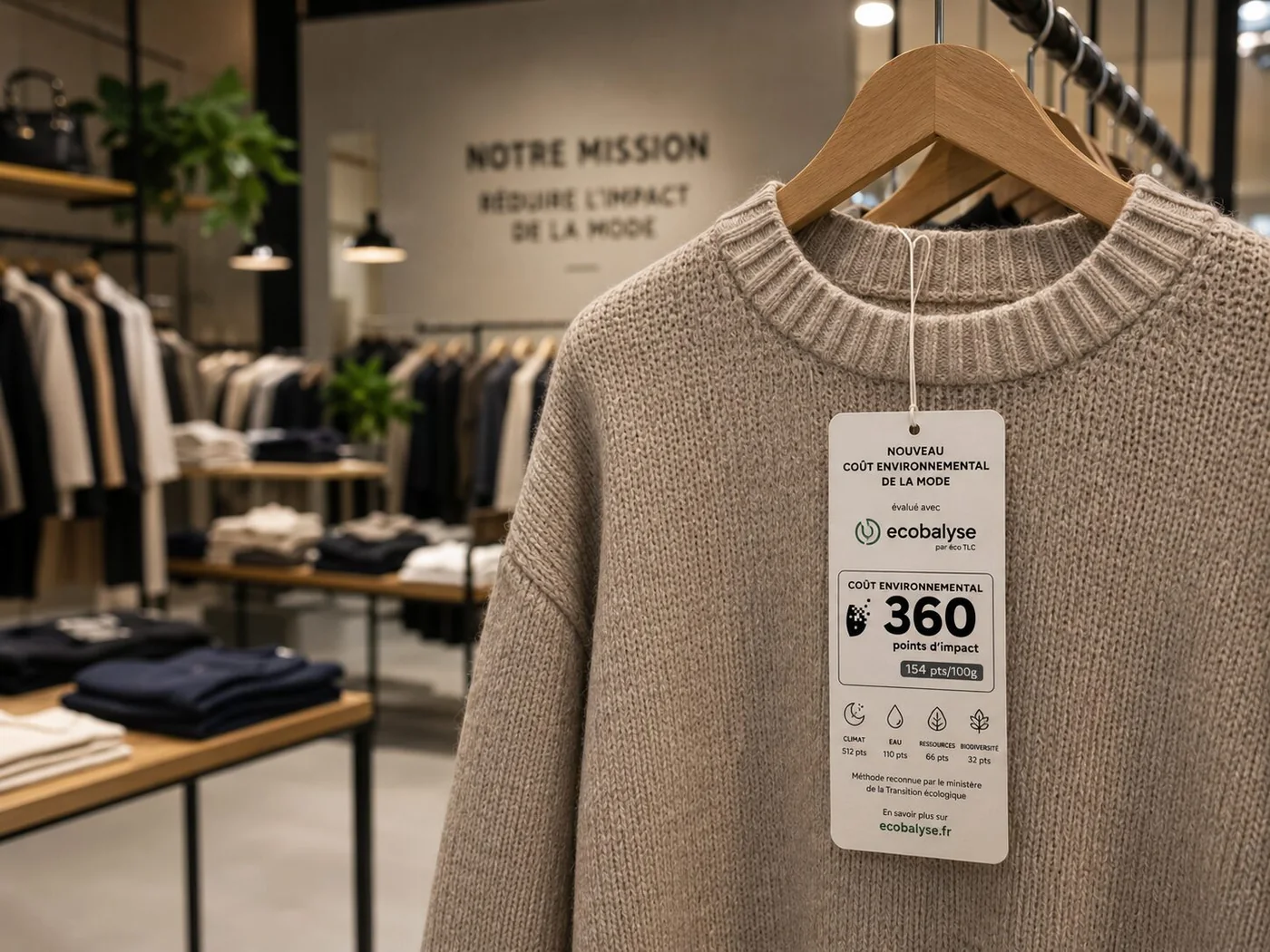
TexScore, our solution for calculating and publishing the textile Eco-score
Read more about TexScore
Why your ERP isn't the problem (and what is)
Read more about ERP
Sustainable mobility plans: what the new regulation demands from companies
Read more about Mobility PlanWant us to analyze your case?
Request a free diagnostic and we'll propose a concrete action plan.
Start a conversation